GO BACK
Buying a Villa in Kochi: K-RERA and Legal Checklist (2026)
- Published
- NOV 3, 2026
- Category
- General
A villa in a gated community has become one of the most popular ways to own a house in and around Kochi. You get your own plot and your own front door, without managing a construction project yourself, plus shared security, roads and often a clubhouse. For NRI families, a well-run villa project can be the simplest route to a home in Kerala that is ready when they return.
It is also a large purchase made largely on trust: in the builder, in the papers, and in a brochure that may show a house that does not yet exist. Most problems buyers face in Kerala come from a handful of checks that were skipped at the start, not from bad luck.
This checklist walks through what to verify before you pay a booking amount, what to look for in the agreement, and how to work out what the villa will really cost you. It applies across Kochi, from Kakkanad and Edappally to Aluva, Tripunithura and the newer suburbs east of the city, and to villa projects elsewhere in Kerala.
Step 1: Check the K-RERA registration
The Real Estate (Regulation and Development) Act, 2016 is enforced in Kerala by the Kerala Real Estate Regulatory Authority (K-RERA). Most villa projects of any real size must be registered before they can be advertised or sold. The Act's thresholds are land over 500 sq m and more than eight units. Whether smaller projects must register is currently being argued in the Kerala High Court, so if a project claims it does not need registration, ask why in writing.
How to check:
- Go to the K-RERA website, rera.kerala.gov.in, and search the registered projects by project name, promoter name or registration number.
- Make sure the registration is for that specific project and phase, is current, and names the same promoter you are dealing with.
- Open the uploaded documents. Compare the sanctioned layout, number of villas, plot sizes and amenities with what the marketing brochure shows. If they differ, the registered version is what the promoter is legally bound to.
- Check the declared completion date and any extensions.
- If you are dealing through a broker, check that the agent is registered with K-RERA too.
Registration is a strong baseline, but it does not prove clear title or guarantee quality. The rest of this list covers those.
Step 2: Verify the land and title
For a villa, you are buying a specific piece of land with a house on it, so the land papers matter as much as the building.
- Title deed and prior deeds. Ask your lawyer to trace the title back, commonly 30 years, to make sure the promoter, or the landowner they have a joint development agreement with, has clear ownership.
- Encumbrance certificate (EC) from the sub-registrar's office for the same period, to check for existing mortgages, liens or other transactions.
- Land tax receipt and possession certificate from the village office.
- Land classification. The land must not be recorded as paddy or wetland in the data bank under the Kerala Conservation of Paddy Land and Wetland Act, 2008. Projects on converted land need valid conversion orders.
- Your plot's boundaries. Your sale deed should describe your individual plot by survey number and sub-division, its area in cents (1 cent is about 435.6 sq ft or 40.47 sq m), and its boundaries. Walk the plot with the layout plan in hand.
Step 3: Check approvals and permits
- Layout approval for the overall project, from the competent town planning authority where required.
- Building permit for your specific villa type from the local body, under the Kerala Municipality or Panchayat Building Rules depending on location.
- Other clearances where relevant, such as fire, environmental or Coastal Regulation Zone approvals for projects near the backwaters.
- For a completed villa: the occupancy certificate and the building number from the local body, plus electricity and water connections in place, or a clear plan for them.

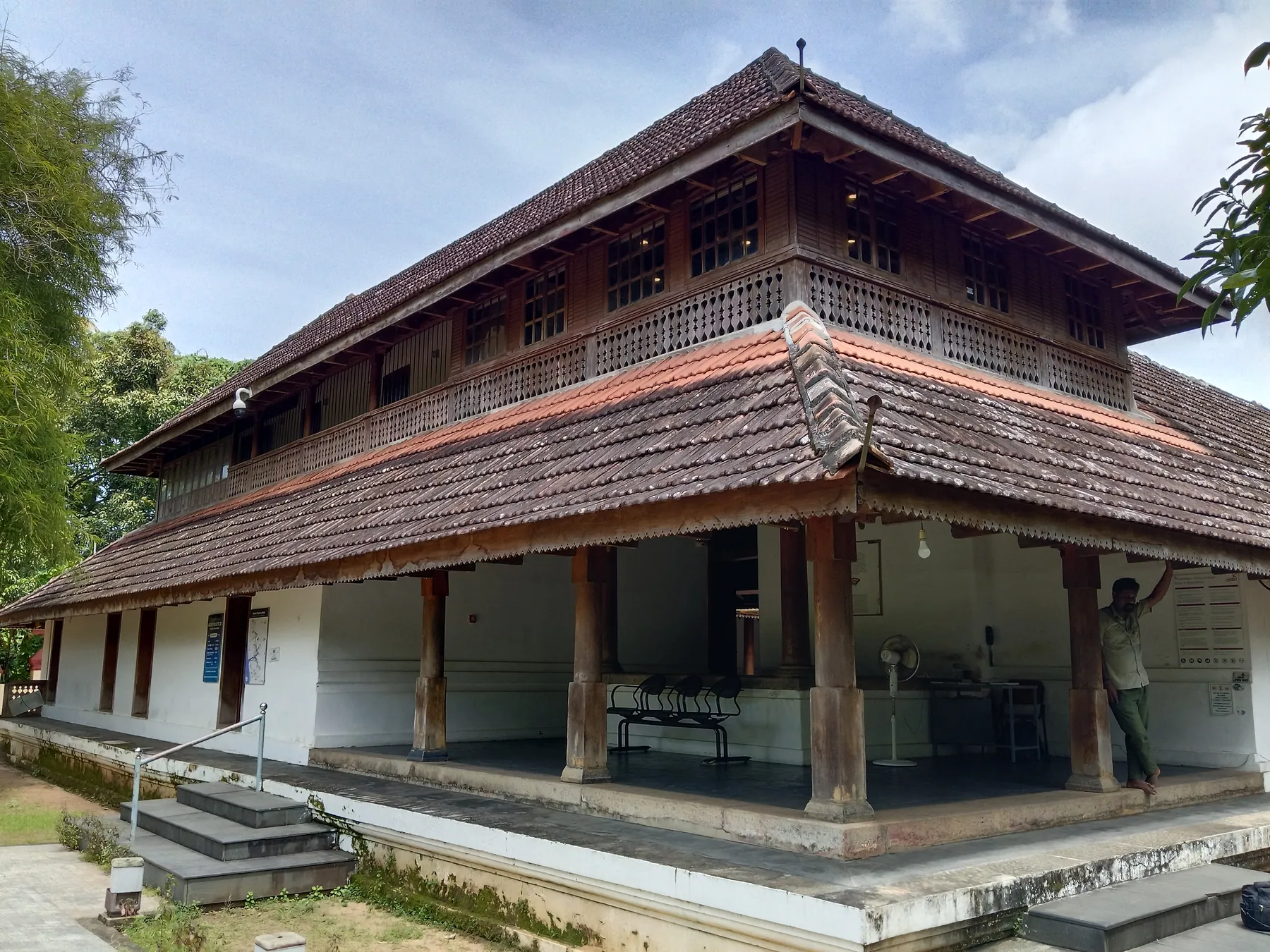
Photo: Galib Tufan, CC BY-SA 4.0, via Wikimedia Commons
Step 4: Understand what you are actually buying
Villa brochures can quote "area" in several ways. Ask for each figure in writing:
- Plot area in cents, for your individual plot.
- Carpet area of the villa, the usable floor area inside the walls. RERA requires carpet area to be disclosed, so you can compare projects on a like-for-like basis.
- Built-up area, including walls, and any covered verandahs or balconies.
- Specifications: structure, walling material, roof type, flooring, doors, windows, sanitaryware and electrical fittings, with brands named.
- Common areas and amenities: road width inside the layout, drainage, street lighting, water supply (borewell, mains or both), sewage treatment, security, clubhouse and who owns and maintains them.
If the project is near water, ask about flood levels in 2018 and how the site and plinth levels were set. In Kochi this is a fair question for any project, not an insult.
Step 5: Read the agreement for sale carefully
Under RERA, the promoter cannot take more than 10% of the price as an advance before a written agreement for sale is signed and registered. Before you sign, check:
- The payment schedule. It should be linked to construction stages, not dates.
- The possession date and the compensation if it is missed.
- Variations and extras. Which upgrades are optional, and how are they priced?
- Defect liability. Under RERA, the promoter must fix structural defects or workmanship and service issues reported within five years of handing over possession, at no cost to you.
- Maintenance terms, the formation of the residents' association, and the corpus fund.
- Cancellation terms on both sides.
Have a lawyer who is not connected to the developer review the draft.
Step 6: Work out the all-in cost
The price on the brochure is rarely the price you pay. Budget for:
Item | Typical amount | Notes |
|---|---|---|
Stamp duty | 8% | On the higher of the agreement value and the government fair value |
Registration fee | 2% | Paid at the sub-registrar's office |
GST | 5% on under-construction homes outside the affordable category | Not charged on a completed villa with an occupancy certificate |
Car parking, clubhouse and amenity charges | Varies | Check whether these are inside or outside the quoted price |
Electricity and water connection charges | Varies | Often collected by the developer |
Maintenance deposit and advance maintenance | Varies | Often 12 to 24 months collected at handover |
Legal fees and home loan processing | Varies | Budget separately |
A quick rule of thumb: for a ready villa, add at least 10% to the agreed price for duty and registration alone, and more for an under-construction one.
Notes for NRI buyers
NRIs can buy villas and other residential property in India freely, paying through NRE, NRO or FCNR accounts or by inward remittance through banking channels. Agricultural land, plantations and farmhouses are not covered by that permission. If you cannot be present for registration, a properly executed and stamped power of attorney lets a trusted person complete it for you. Keep every payment record, since it matters if you ever sell and want to repatriate the money. Our NRI guide to building a home in Kerala covers the power of attorney and payment setup in more detail.
Frequently asked questions
How do I check if a villa project in Kochi is RERA registered?
Search the project or promoter name on the K-RERA website, rera.kerala.gov.in. Confirm that the registration number, project name, phase and promoter match the documents you have been given, and compare the registered layout and specifications with the brochure.
What documents should I get when buying a villa in Kerala?
At minimum: the K-RERA registration details, title deed and prior deeds, encumbrance certificate, land tax receipt, possession certificate, layout approval and building permit, the registered agreement for sale, and for a completed villa the occupancy certificate and building number.
What is the stamp duty on a villa in Kerala?
Stamp duty is 8% and the registration fee is 2%, calculated on the higher of the sale value and the government fair value of the property. Check the current figures with the sub-registrar's office before registration.
Is it better to buy a villa or build my own house?
A villa saves you the effort of managing construction and usually comes with shared infrastructure and security. Building your own house gives you full control over the design and specifications, and often more house for the money on land you already own. Many families compare both before deciding.
Looking at villas in Kochi?
We build and sell our own villa projects around Kochi, and we are glad to share every document on this list. Browse our villas for sale, compare them with building on your own plot, or book a site visit and bring your lawyer along. We would rather you check everything.
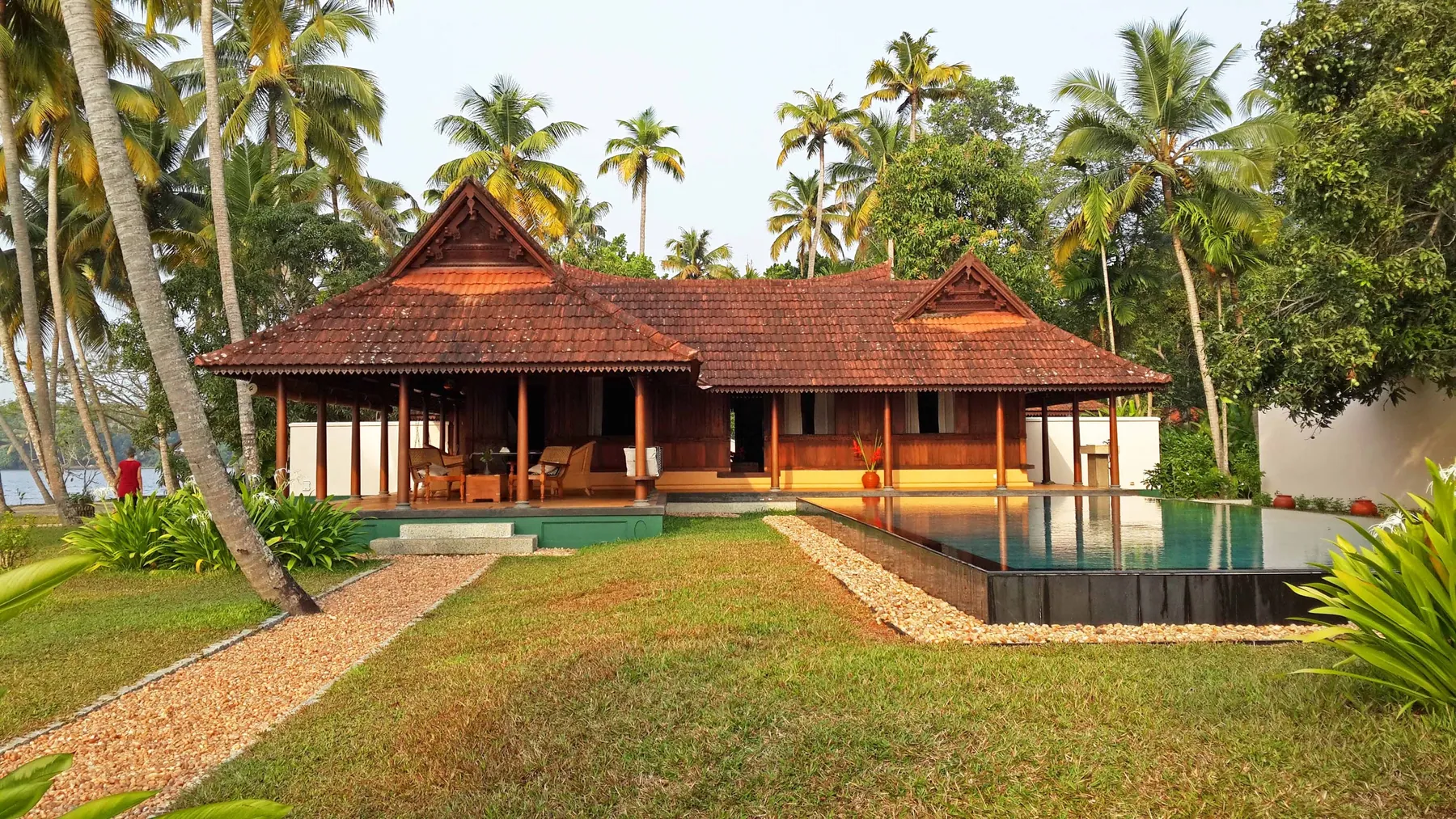
Cover photo: ArchKarl, CC BY-SA 4.0, via Wikimedia Commons
 Related Articles